
Hanging anything on the walls of a London new-build can feel like guesswork. One wall feels hollow, another feels rock-solid, and sometimes the drill bit hits something that feels like metal. This is normal — new-build flats often use a mix of plasterboard, dot-and-dab, and reinforced concrete. Choosing the right wall plugs and screws makes all the difference between a secure fitting and a wall disaster.
Below is a simple homeowner-friendly guide to what actually works in London’s modern apartments in 2025.
Understanding Your New-Build Walls
Most London new-builds (City Island, Goodluck Hope, Royal Docks, Poplar, Canary Wharf, Wembley, Stratford, Battersea, etc.) use three common wall types:
- Plasterboard walls – hollow, light, easy to damage
- Dot-and-dab walls – plasterboard glued onto concrete
- Reinforced concrete walls – very strong, very hard to drill
Knowing which one you’re dealing with helps you choose the right plugs.
A quick test:
Tap the wall.
- Hollow sound = plasterboard
- Solid thud = concrete or dot-and-dab
Best Plugs for Plasterboard Walls
Plasterboard can’t grip traditional red or brown plugs. You need something designed to spread its load.
The best options are:
• GripIt Blue (or Red depending on load)
Excellent for heavy items like curtain poles, shelves, and cabinets. Creates a strong anchoring wing inside the plasterboard.
• Metal Self-Drill Plasterboard Fixings
Good for medium loads: small shelves, picture frames, coat hooks. Quick and clean.
• Fischer UX or Fischer Duopower (for dot-and-dab)
These expand in multiple directions and work well if the plasterboard has concrete behind it.
Avoid:
Red plugs, yellow plugs, or cheap plastic anchors. They pull straight out of plasterboard.
Best Plugs for Dot-and-Dab Walls
Dot-and-dab is plasterboard stuck onto a concrete block with glue “dabs.”
You may drill through the plasterboard and hit nothing — or hit rock-hard concrete.
Good options:
• Fischer Duopower 6mm or 8mm
Adapts to hollow or solid areas, perfect for unpredictable walls.
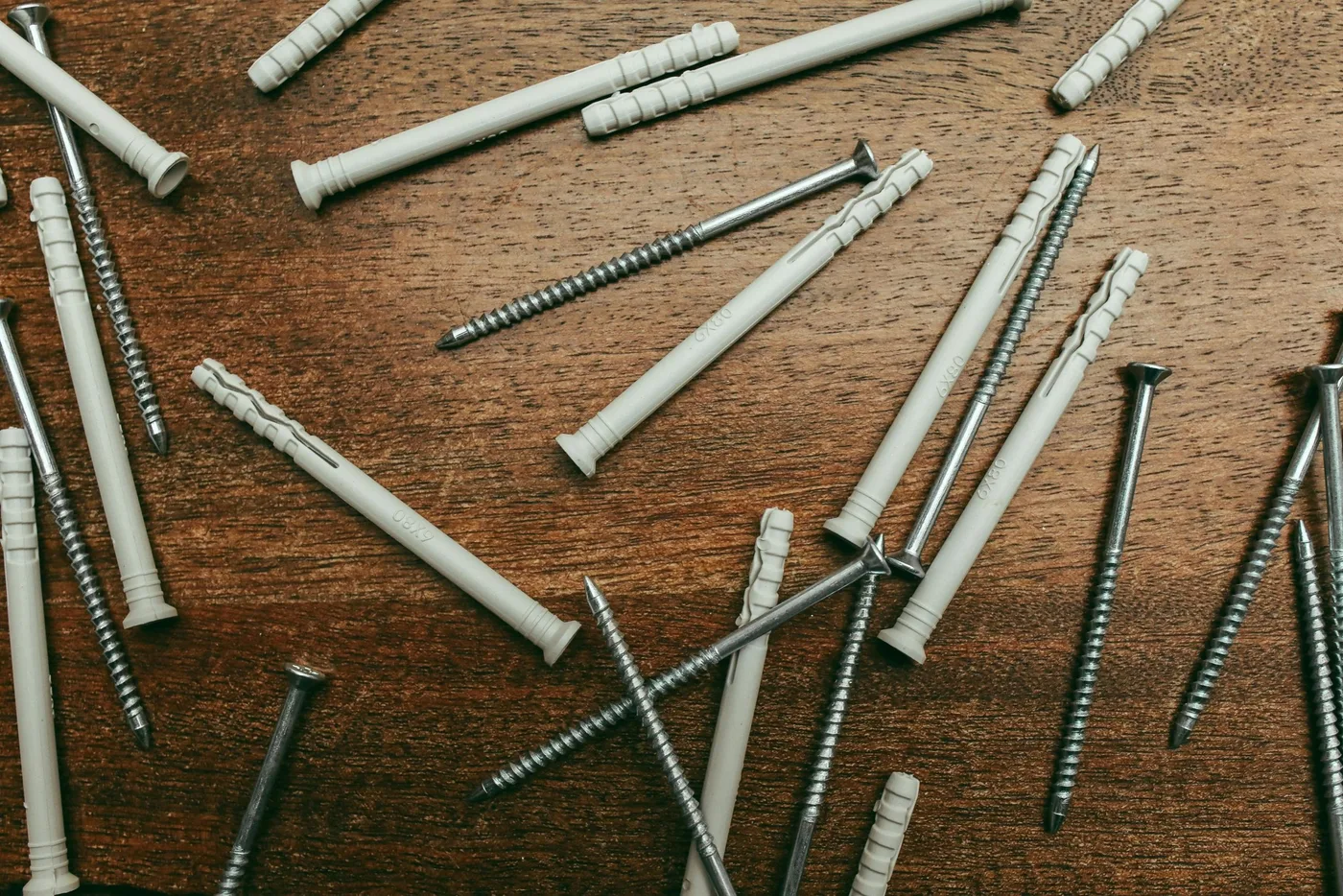
• Long-frame wall plugs (6mm x 60mm or 8mm x 80mm)
Allows the screw to reach the solid block behind the plasterboard.
Tip:
Use a long screw (40–80mm) so it reaches into the concrete.
Best Plugs for Reinforced Concrete Walls
Many new-build bedrooms and living rooms use reinforced concrete behind skim plaster.
Good options:
• Standard grey or brown plugs (6mm or 7mm)
For lighter loads like pictures or small brackets.
• Heavy-duty frame fixings (8mm or 10mm)
For TV brackets, large shelves, and anything weight-bearing.
• Concrete screws
Strongest option; no plug needed but requires a pilot hole.
Drilling tip:
Use an SDS drill if possible. A normal DIY drill may struggle.
What Screws Should You Use?
Pair your plugs with high-quality screws.
Best choices:
• 4mm x 40mm screws – general use, light to medium loads
• 5mm x 70mm screws – shelves, cabinets
• 5mm x 100mm screws – dot-and-dab to reach the solid block
• Zinc-plated or stainless steel screws – resist rust, stronger than cheap screws
Avoid the tiny screws included in cheap IKEA or Amazon products — they’re often too weak for London walls.
Common Mistakes to Avoid
- Using red/yellow plugs in plasterboard
- Using short screws that don’t reach solid block
- Drilling on top of cables or pipes without checking
- Mounting heavy items with no load-bearing plug
- Using a low-power drill on concrete walls
A good general rule:
If you’re mounting something heavy above eye level, use a strong fixing like GripIt or Fischer.
Final Recommendation for Most London New-Builds
If you’re not sure what wall you have, your safest all-round choice is:
Fischer Duopower + 4mm or 5mm screws
They grip in hollow and solid walls, making them ideal for unpredictable new-build construction.
For heavy items (TV, cabinets, large shelves):
GripIt + long woodscrews
For concrete:
Grey/brown plugs + SDS drill
These combinations cover 90% of London new-build scenarios.
You can paste this into the WordPress editor to confirm it displays exactly how you want.